Desert Run
Shift at the right moment. Beat the four desert bosses.
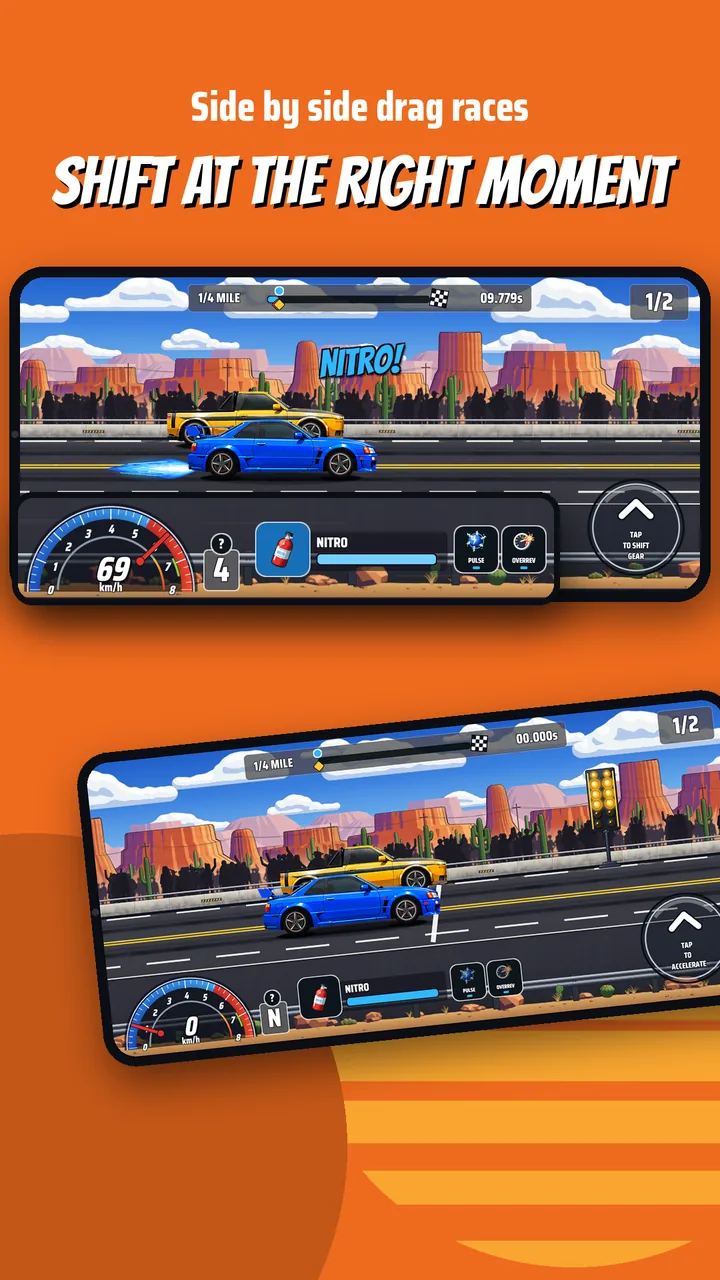
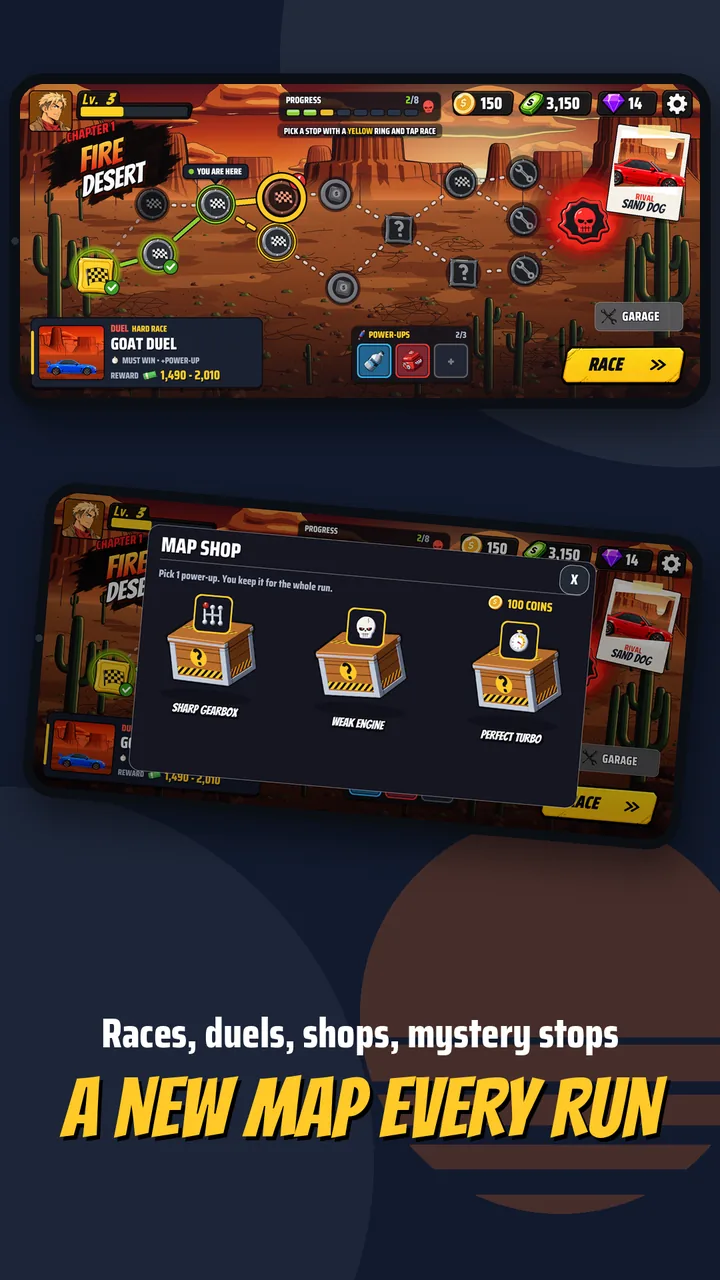
Desert Run is a side by side drag racing game with a roguelike map. Wait for the green light, shift when the needle is in the green zone and use nitro, pulse and overrev on the straight. Every run has a new map of races, duels, shops, workshops and mystery stops, and losing a single race sends you back to chapter 1, with one second chance per run. Four lands each have a boss that changes one rule of the race, and the money you win buys permanent upgrades for the engine, gearbox, nitro and tires. Races work offline, in English and Portuguese.
Screenshots
What it does
Simple premise. Real value.
Launch and shift on time
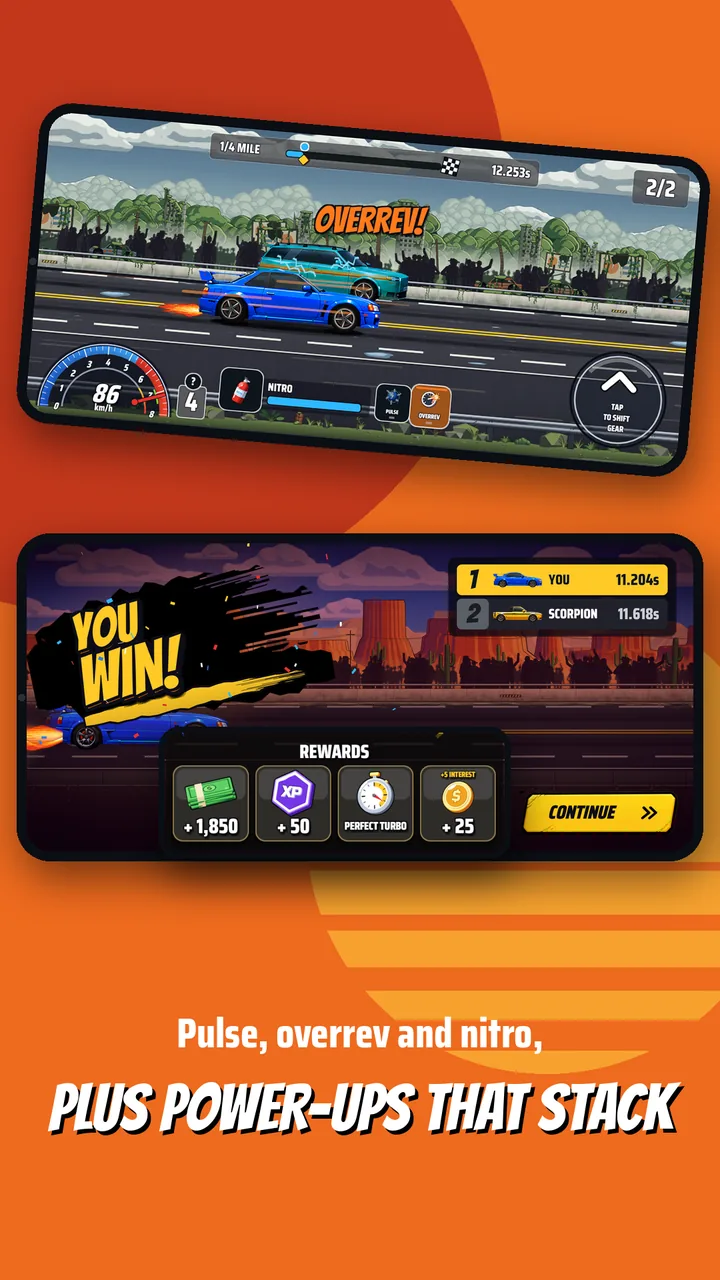
Tap on green, shift when the needle is in the green zone. A perfect shift gives an extra push, an early tap is a false start.
A new map every run
Choose a route of races, harder duels, power-up shops, workshops and mystery stops. Power-ups stack until the run ends.
Four lands, four bosses
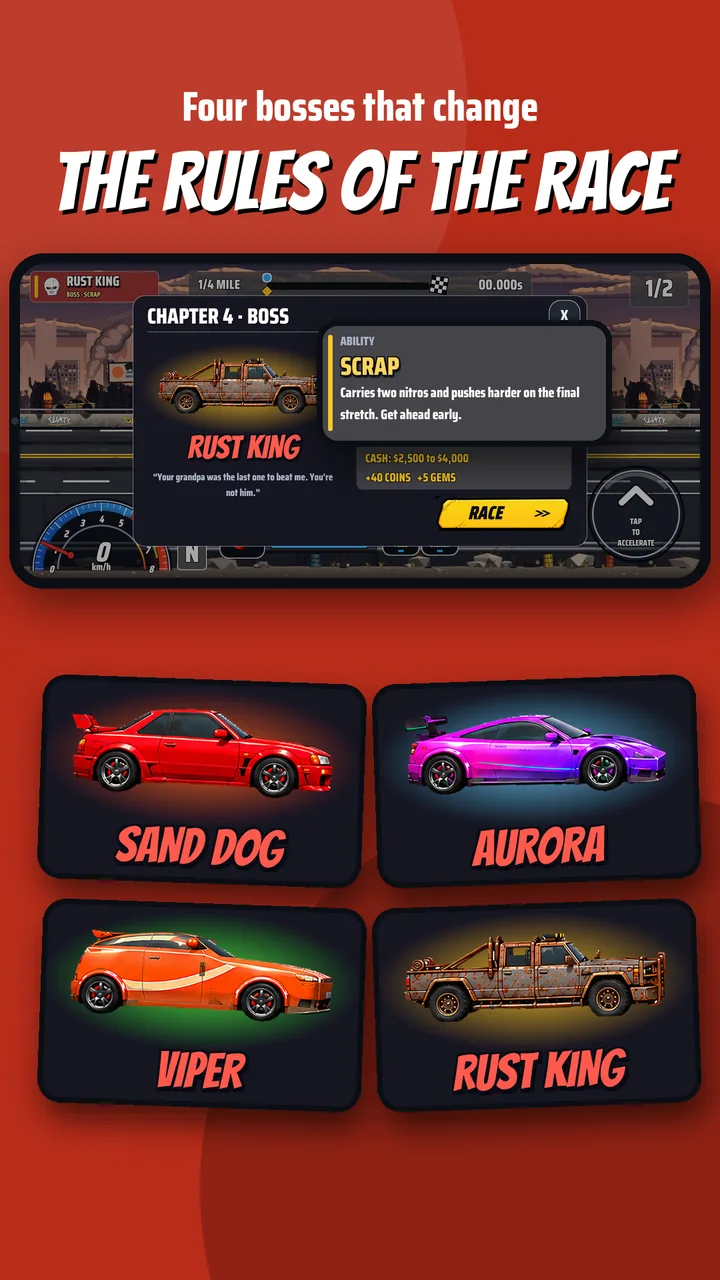
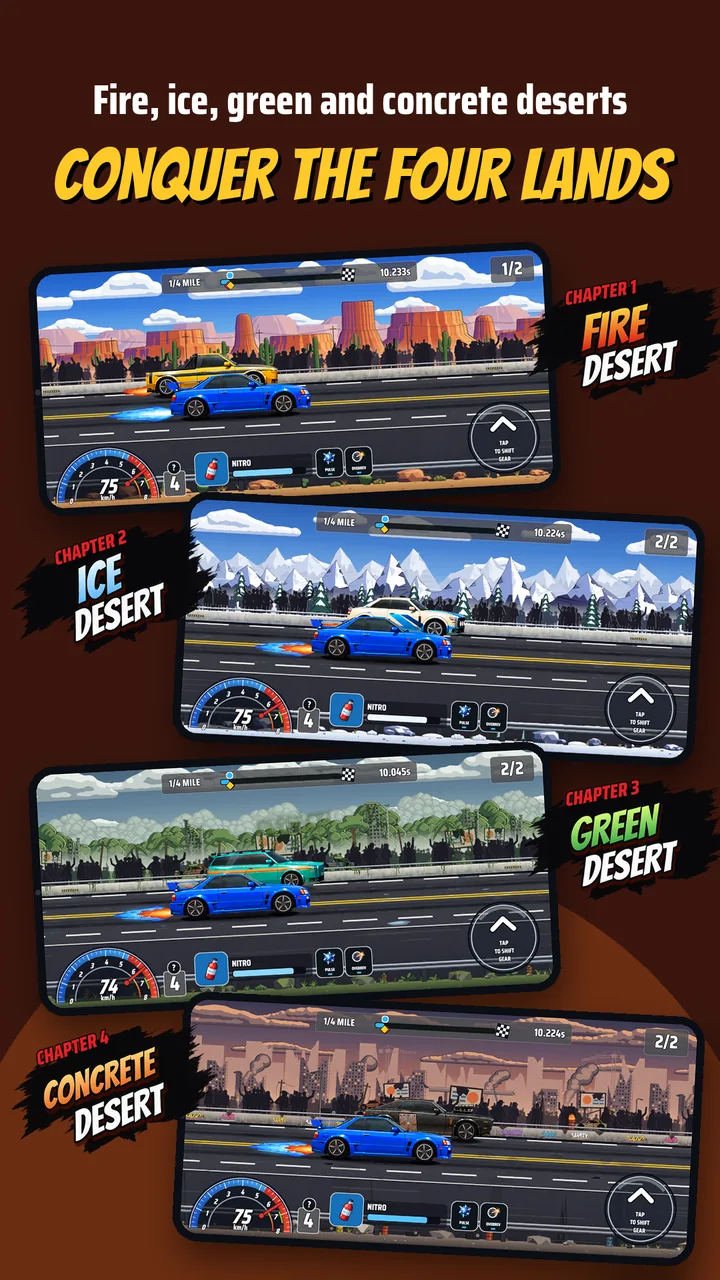
Fire, ice, a forest over an abandoned city and a city in ruins. Each boss changes one rule of the race.
A garage that stays
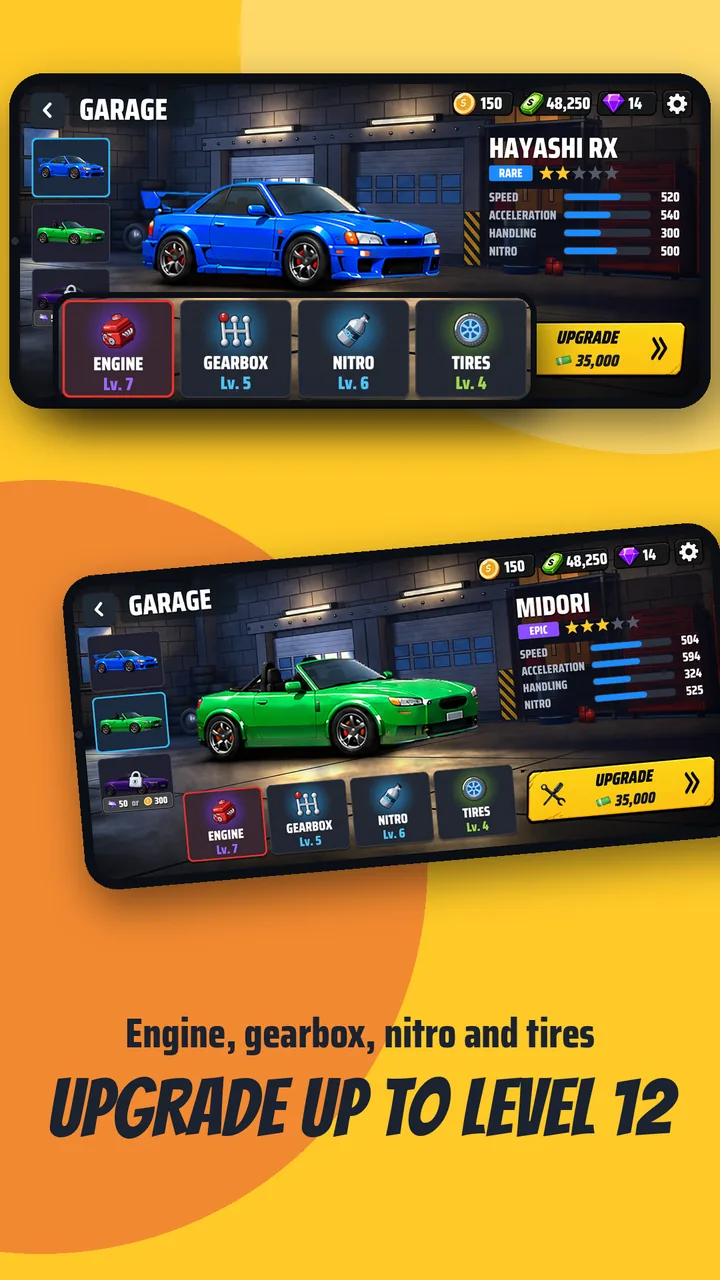
Engine, gearbox, nitro and tires up to level 12, plus more cars. Upgrades survive a game over.
The story behind it
The Problem
Drag racing games on the phone tend to be the same race repeated with bigger numbers. I wanted each run to play differently, the way a roguelike does, while the race itself stays about timing a launch and a shift.
What I Built
A Unity 6 game in URP 2D where the whole interface is built in C# with no prefabs: one boot script creates the camera and the canvas and swaps the screens. A seeded branching map in the style of Slay the Spire picks the route, and a longitudinal car model with gears, shift quality and nitro runs each race against an AI with a style per boss.
What I Learned
Rendering the cars as 3D models in Blender was rejected three times. The cars that shipped are 2D drawings cut from a painted sheet, with the wheels spinning on a spring-damper suspension, which reads better at phone size than any of the renders.
What the app collects, and the rules for its paid features: privacy policy and terms of use.