Ciclogravura
Sand art inside a glass bottle.
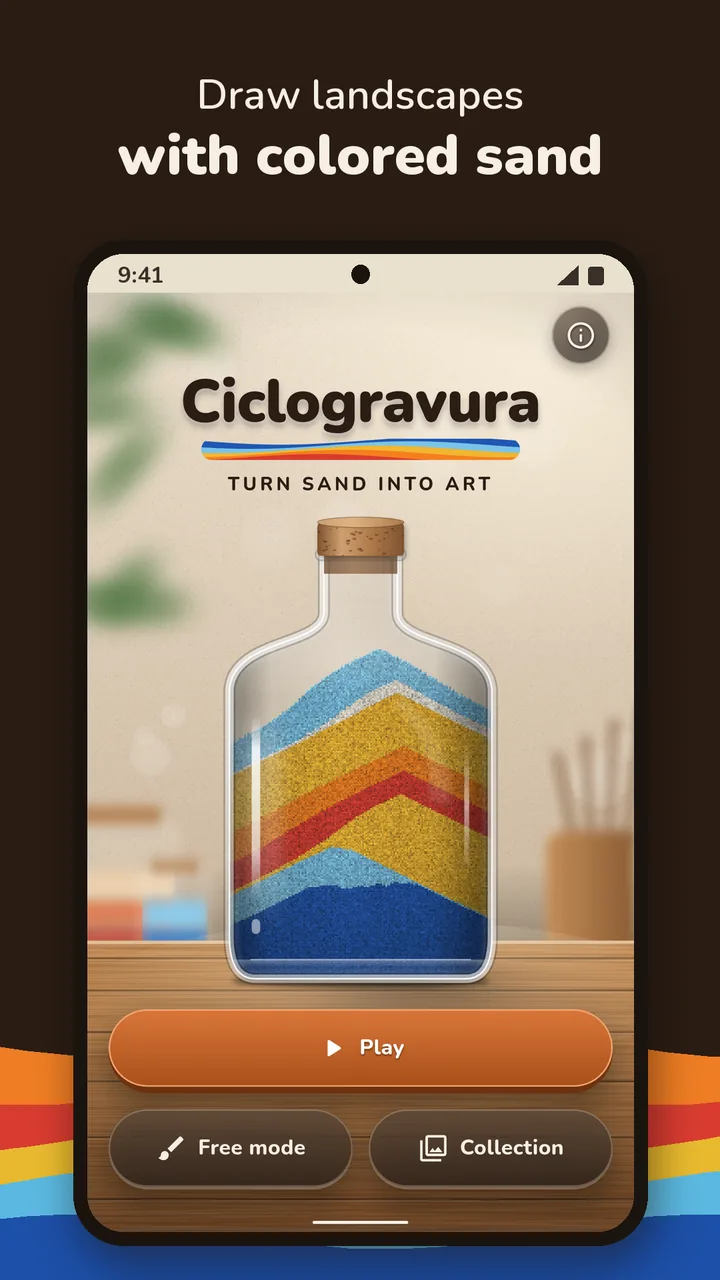
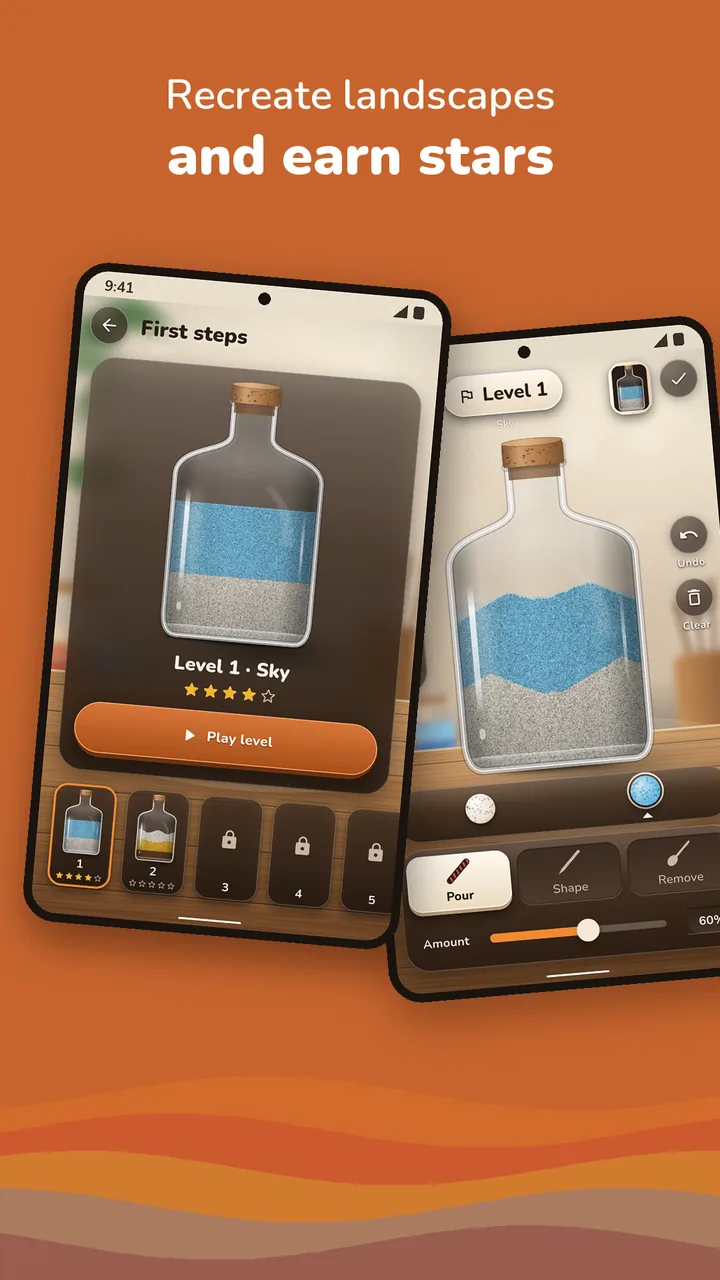
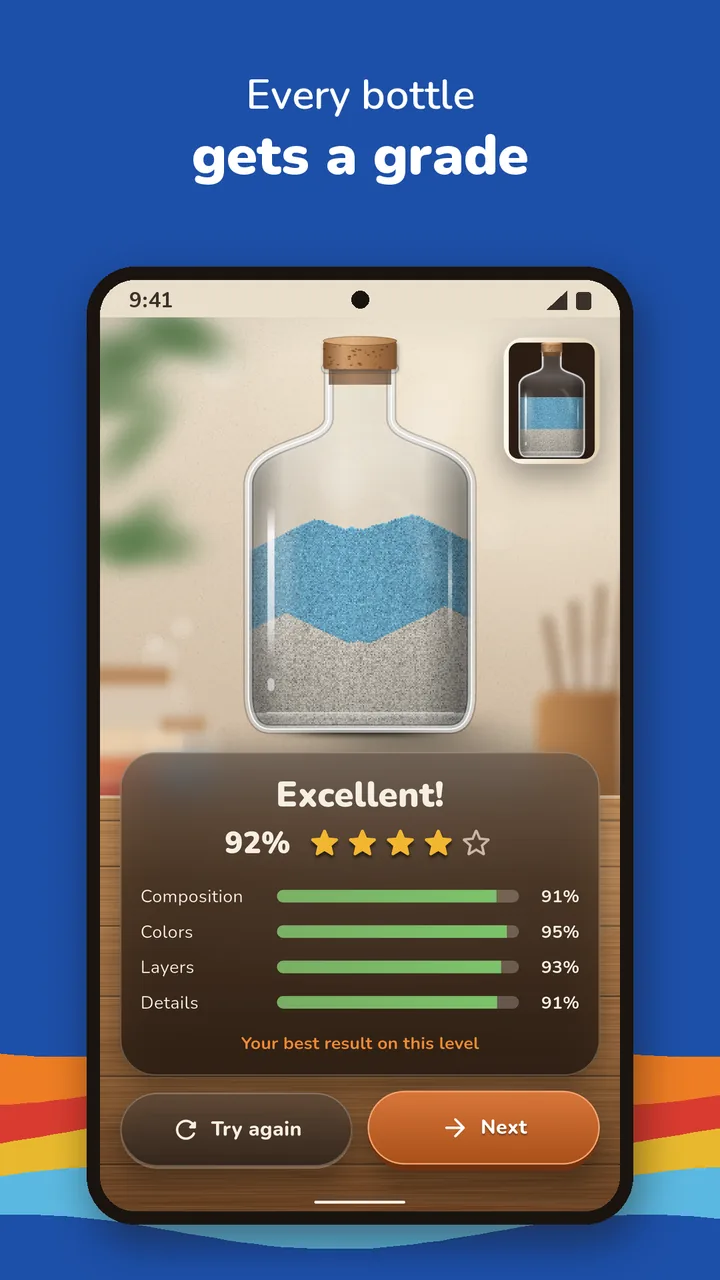
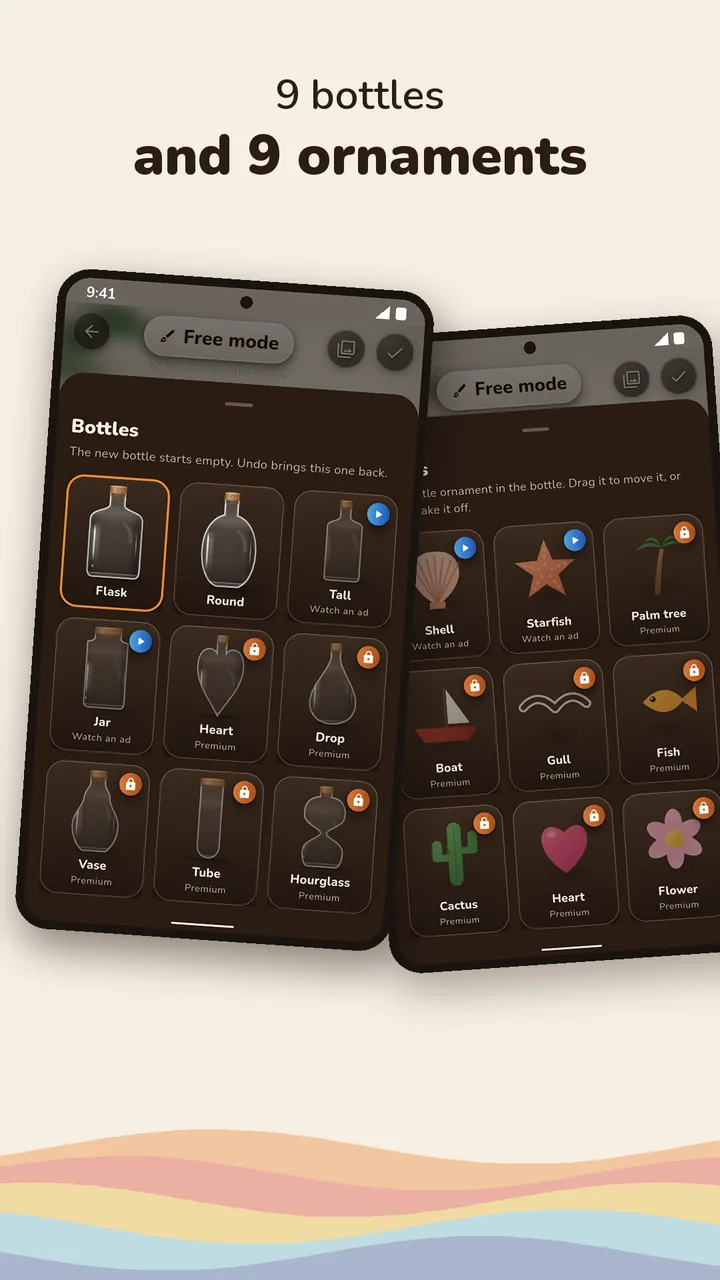
Ciclogravura is a portrait game based on a craft from the Brazilian Northeast: drawing landscapes inside a glass bottle with colored sand. Pour sand through a straw, tilt the phone to make the layers slide, push them with a skewer, take some out with a spoon and set small items inside. Free mode has no goal and no score, and the campaign asks you to recreate a reference landscape and grades your bottle in stars. Some bottles and items open after a rewarded video you choose to watch, and one optional lifetime Premium through Google Play opens all of them, skips the videos and removes the watermark from shared pictures.
Screenshots
What it does
Simple premise. Real value.
Straw, skewer and spoon
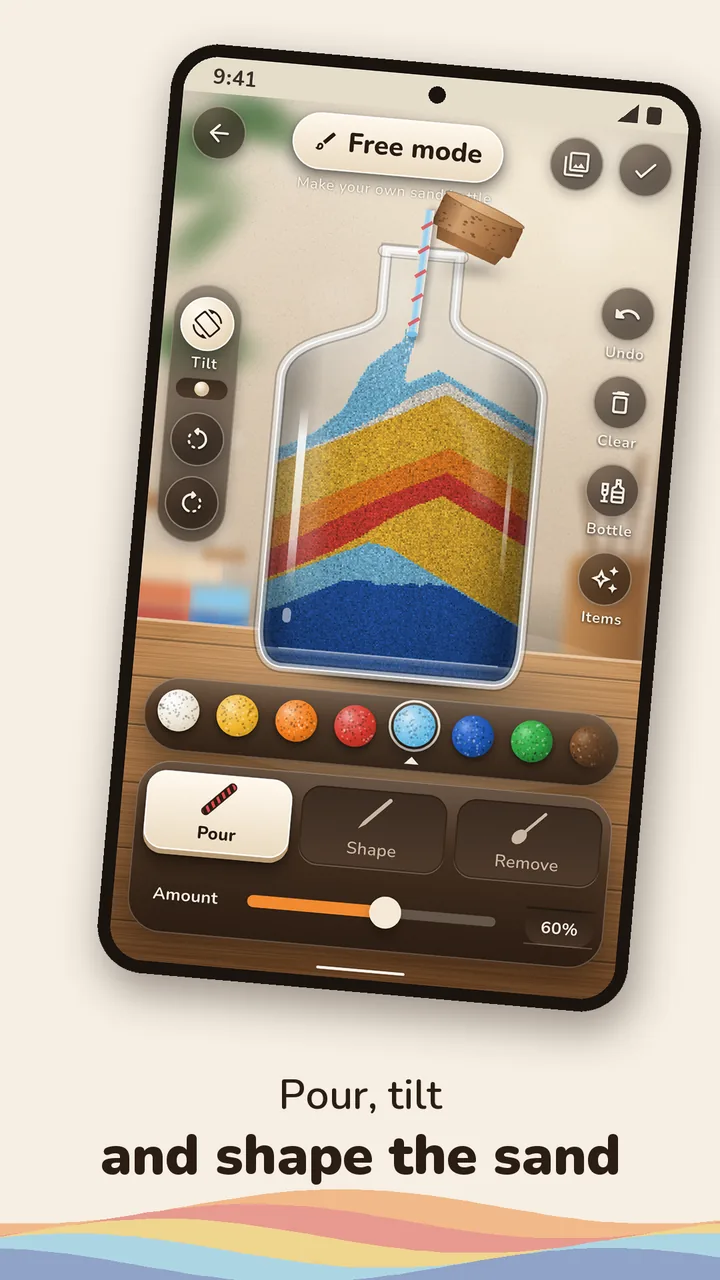
Pour with the straw, shape with the skewer and remove with the spoon, in 14 sand colors, with undo at any time.
Real tilt
The sand runs as you turn the phone, read from the accelerometer, or with the tilt buttons on screen.
Free mode and collection
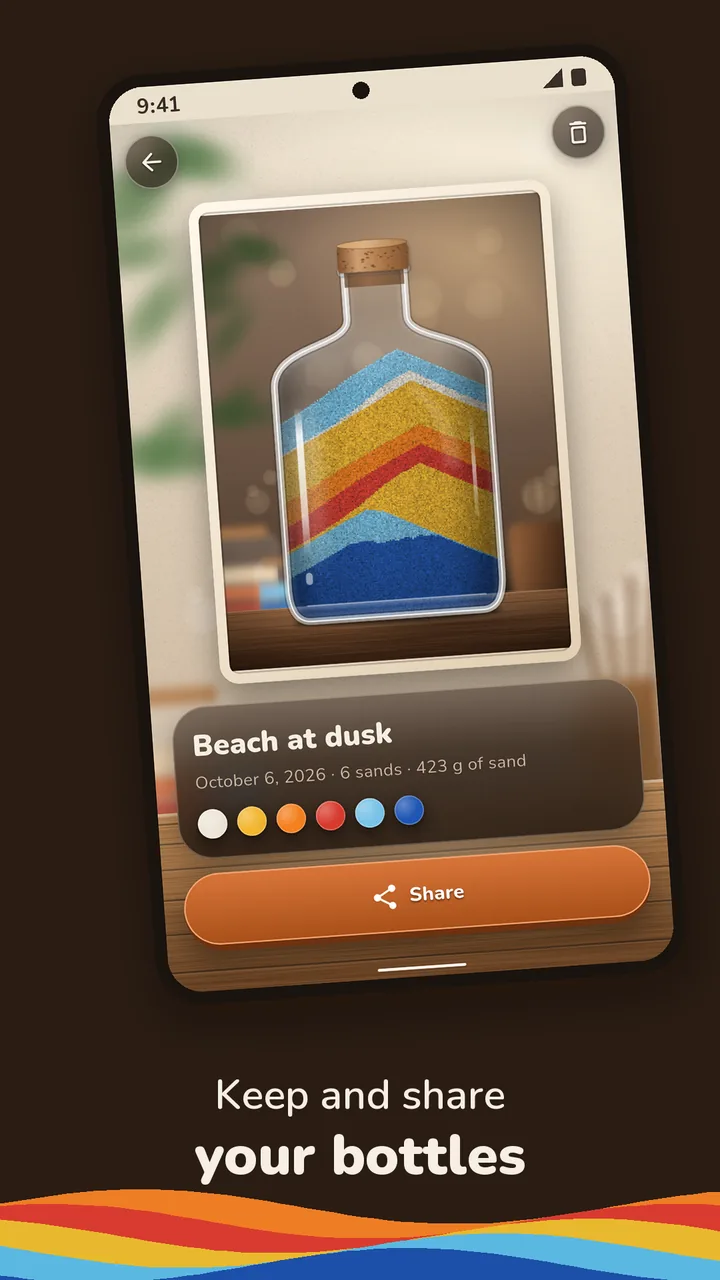
No goal and no rush. Finished bottles go into a collection, each with the weight of sand it took, and can be shared as a picture.
Campaign
Two worlds and 9 levels, such as the backlands, a raft and the Lençóis dunes. Each bottle is compared with the reference and earns one to five stars.
Bottles and items
9 bottle shapes and 9 items, like a shell, a palm tree and a cactus, set inside with tweezers and held in place by the sand around them.
The story behind it
The Problem
Falling-sand toys usually treat sand like a liquid: it levels out and any shape you carve collapses. In the real craft the artisan carves hills and skies against the glass with a thin rod, so the game had to let that work stay in place.
What I Built
A Flutter app with a Flame loop over a pure-Dart grid of 160 by 260 cells, one grain per cell, stepped a fixed 100 times a second. Grains speed up as they fall, hold on 20% of the time so slopes collapse in small avalanches and rest near 32 degrees, and grains pressed by the skewer only fall straight down, which is what keeps a carved shape. The skewer follows the palheta used in Majorlândia: it sinks the upper color into the layer below and never swaps cells.
What I Learned
Most of the feel came from a handful of small physics rules, not from the drawing. The drawing had its own limit: the sand picture is rebuilt every frame, and painting each grain as 3 by 3 pixels crashed the emulator's GL driver after a minute of pouring, so it stays one pixel per grain.
Sand art inside a glass bottle.
A game based on the Brazilian sand bottle craft: pour colored sand, tilt the phone and shape landscapes against the glass, grain by grain.
Get it free on Google PlayWhat the app collects, and the rules for its paid features: privacy policy and terms of use.